
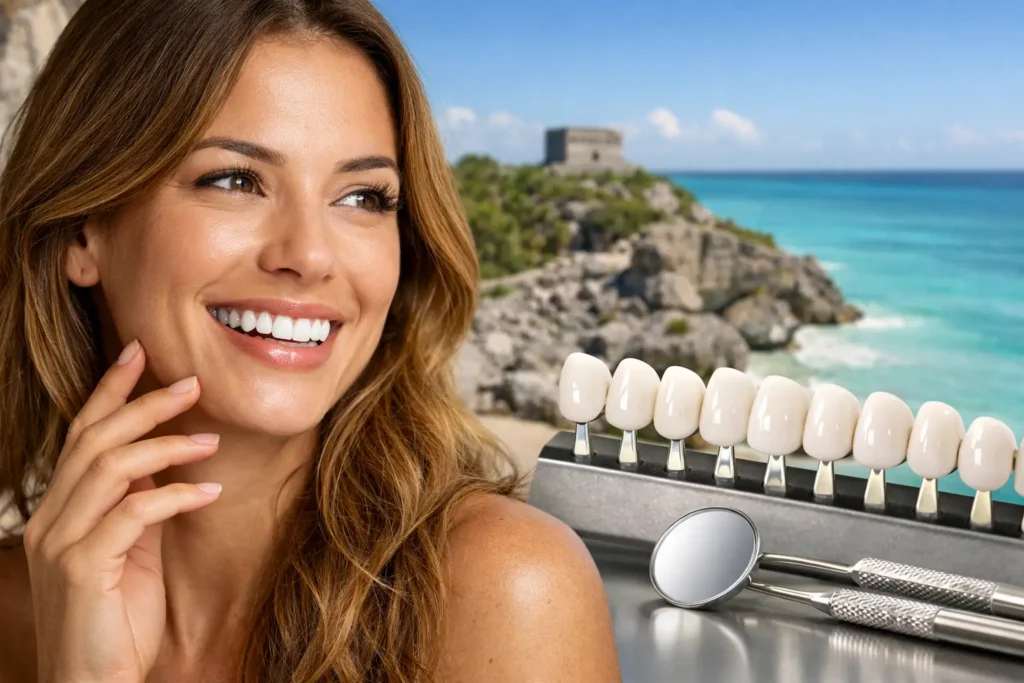
A brighter, more even smile can change how you feel in photos, meetings, and everyday conversations. For many patients from Arizona and beyond, porcelain veneers in Mexico offer an accessible path to cosmetic improvement – but the best outcome depends on much more than choosing a shade of white.
Veneers are a custom treatment. They should complement your facial features, bite, gumline, and natural teeth while protecting the health of your smile. Before making travel plans or comparing prices, it helps to understand what porcelain veneers can do, who benefits from them, and what quality care should include.
What porcelain veneers are designed to fix
Porcelain veneers are thin, custom-made shells bonded to the front surfaces of teeth. They are commonly used to improve concerns that whitening or simple bonding may not fully address, such as deep discoloration, small chips, worn edges, uneven tooth shape, minor gaps, or teeth that appear too short or slightly misaligned.
Because porcelain reflects light in a way that resembles natural enamel, it can provide a refined, lifelike result. It also resists staining better than composite resin. That does not mean veneers are maintenance-free, however. Coffee, red wine, tobacco, and strongly pigmented foods can still affect the surrounding natural teeth and may influence how uniform a smile looks over time.
A veneer is not a shortcut for untreated dental problems. Cavities, gum inflammation, active periodontal disease, and unstable bite issues should be diagnosed and managed first. Cosmetic dentistry works best when it is built on healthy teeth and gums.
Are porcelain veneers in Mexico right for you?
The right candidate has generally healthy teeth and gums, enough enamel for reliable bonding, and clear goals for the appearance of their smile. Veneers are often an excellent option when several front teeth need cosmetic improvement at the same time and the patient wants a durable, highly customized material.
They may not be the first recommendation for everyone. If the main concern is tooth color, professional whitening can be a more conservative approach. If teeth are significantly crooked, orthodontic treatment may preserve more natural tooth structure. A tooth with extensive decay, a large existing filling, or a prior root canal may need a crown rather than a veneer. For patients who clench or grind their teeth, veneers may still be possible, but protecting the final result with a custom night guard is often part of the plan.
This is why a thorough evaluation matters. A beautiful smile should also feel comfortable when you bite, speak, and chew.
Veneers require thoughtful preparation
Traditional porcelain veneers usually require a small amount of enamel to be reshaped so the restoration can sit naturally and avoid looking bulky. This is a permanent change to the tooth. Minimal-prep options are available in select cases, but they are not automatically better. If a tooth already projects forward or is dark underneath, a no-prep veneer can look thick or may not mask the color adequately.
A qualified dentist will explain how much preparation is expected, why it is needed, and what alternatives may be appropriate. Patients should be cautious about promises of a perfect smile without an examination or discussion of bite, gum health, and tooth structure.
What a quality veneer process should include
High-quality porcelain veneers are not chosen from a one-size-fits-all menu. They are planned with your health, proportions, and preferences in mind.
The process typically begins with a consultation, digital imaging or photographs, an oral exam, and often X-rays. Your dentist should ask what you would like to change and also identify what already works well in your smile. Some patients want a subtle refresh that looks like their natural teeth on their best day. Others prefer a more noticeable change in brightness and symmetry. Both goals can be appropriate when the treatment plan remains realistic and healthy.
Next comes smile design. This step considers tooth length, width, color, smile line, lip movement, gum contour, and facial balance. A diagnostic wax-up, digital preview, or temporary mock-up can be especially helpful because it gives you a clearer sense of the proposed shape before final porcelain is created.
After any necessary tooth preparation, impressions or digital scans are used to create the veneers. A dedicated dental laboratory and close communication between the treating dentist and technician can make a meaningful difference here. Fine details – translucency, edge texture, surface characterization, and shade transitions – are what keep veneers from looking flat or artificial.
At the final appointment, the dentist checks fit, color, shape, contacts between teeth, and bite before bonding. This is not a step to rush. Once veneers are bonded, adjustments are more limited, so careful evaluation helps protect both appearance and comfort.
Why coordinated care matters for treatment in Mexico
Traveling for dental treatment can be convenient, particularly for patients near the border, but convenience should never replace proper planning. If you are considering porcelain veneers in Mexico, look for a practice that can evaluate the full condition of your mouth rather than treating veneers as an isolated cosmetic purchase.
A multidisciplinary clinic can coordinate care when a patient needs gum treatment, a root canal, replacement of an old restoration, orthodontic alignment, or bite support before cosmetic work. This reduces the risk of placing new veneers over problems that could compromise the result later.
For U.S. patients visiting northern Mexico, bilingual communication is another practical benefit. You should feel comfortable asking about the treatment sequence, the number of visits, temporary veneers, materials, aftercare, and what happens if an adjustment is needed after you return home. Clear answers are part of quality care.
At Rio Colorado Dental Group, specialist-led planning, modern technology, and in-house laboratory support help patients receive cosmetic care that considers the health of the entire smile, not just the visible front teeth.
Cost is important, but value is more than the price
One reason patients consider dental care in Mexico is affordability. The total cost of porcelain veneers can vary based on the number of teeth treated, the complexity of preparation, the material selected, laboratory work, whether temporary veneers are needed, and any restorative or periodontal care required first.
It can be tempting to compare only a per-veneer price. A more useful comparison asks what is included in the plan. Does the estimate cover the exam, imaging, design process, temporaries, laboratory fabrication, fitting appointments, and follow-up? Is the clinician evaluating your bite? Are the veneers being made for your individual smile, or are they based on a generic shape and shade?
Lower cost does not need to mean lower standards. Still, a result that looks natural and functions well requires planning, skilled preparation, quality materials, and careful bonding. Those steps are where long-term value is created.
Planning your appointments and recovery
Veneer treatment commonly requires more than one visit. Patients traveling from Yuma, other parts of Arizona, Southern California, Nevada, or farther away should ask for a realistic schedule before booking transportation. The number and timing of appointments depend on whether preliminary care is needed and on the laboratory process.
After tooth preparation, temporary veneers may be placed to protect prepared teeth and give you a preview of the new smile. It is normal to experience temporary sensitivity, especially with hot or cold foods. After bonding, most patients return to normal routines quickly, though your bite may need a short adjustment period.
Give yourself enough time before an important event. A wedding, graduation, or professional photo session is not the ideal deadline for last-minute cosmetic treatment. Allow room for final adjustments and for yourself to become comfortable with the change.
How to care for veneers after treatment
Porcelain is durable, but it is not indestructible. Brush twice daily with a nonabrasive toothpaste, floss carefully, and continue regular professional cleanings. A soft-bristled toothbrush is a good everyday choice.
Avoid using your teeth to open packages, bite fingernails, or hold hard objects. Be mindful with very hard foods such as ice or hard candy. If you grind or clench, wear the night guard recommended by your dentist. These habits help protect both veneers and the natural teeth supporting them.
You should also maintain routine checkups even if your smile feels and looks great. Your dentist can monitor the edges of the veneers, gum health, bite changes, and the condition of the natural teeth beneath and around the restorations.
Questions worth asking before you begin
Ask who will plan and place your veneers, whether the provider evaluates gum health and bite function, and what material and laboratory process will be used. Ask to see examples of work that reflect the style you want, not simply the brightest possible result.
It is also reasonable to ask how many visits your case will require, whether temporary veneers are included, how aftercare is handled, and what habits could shorten the lifespan of your restorations. A patient-centered team will welcome these questions and explain recommendations in language you understand.
The best veneer treatment does not make every smile look the same. It creates a result that looks believable, feels comfortable, and gives you more confidence each time you smile.
