
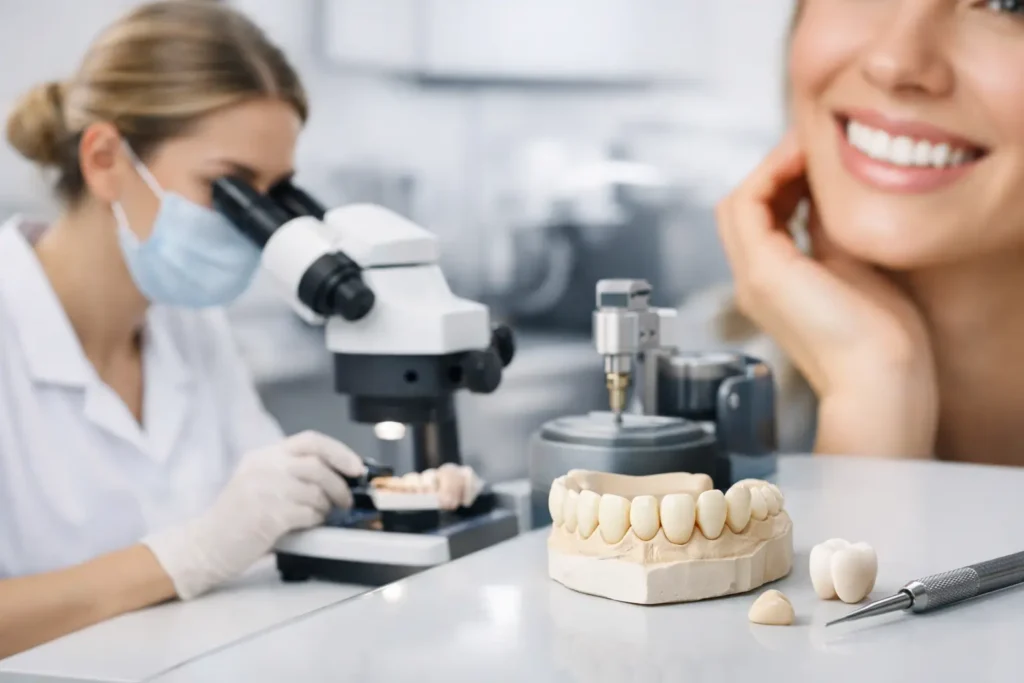
A crown that feels too high, a denture that rubs, or veneers that do not match your natural teeth can affect more than your comfort. They can delay your treatment and make you hesitant to smile. That is where in house dental lab benefits become meaningful: the clinical team and dental technicians can work more closely to create restorations designed around your bite, goals, and appearance.
For patients receiving crowns, bridges, dentures, implant restorations, or cosmetic dental work, the quality of the final result depends on more than the procedure itself. It also depends on the planning, materials, communication, and adjustments behind the restoration. A dedicated dental lab can bring those important steps closer to your care team.
What an In-House Dental Lab Does
A dental laboratory creates custom restorations that replace or improve teeth. Depending on the treatment plan, this may include crowns, bridges, dentures, partial dentures, implant-supported teeth, veneers, temporary restorations, and other prosthetic appliances.
When a practice has a dedicated in-house lab, the lab team works in direct coordination with the dentists and specialists treating you. Rather than sending case information to a distant outside laboratory and communicating primarily through forms, the dentist may be able to review details with the technician more directly.
This does not mean every restoration is made in one visit, or that every case follows the same timeline. Complex implant cases, highly customized cosmetic work, specialized materials, and cases requiring additional testing may take longer. The advantage is closer coordination throughout the process, especially when your treatment needs to balance function, comfort, and appearance.
In-House Dental Lab Benefits for Comfort and Quality
The strongest benefit of an in-house dental lab is collaboration. Your dentist is responsible for evaluating your oral health, bite, tooth structure, and treatment needs. The lab technician translates that clinical plan into a restoration with the right shape, shade, contours, and fit. When those professionals can communicate quickly, details are less likely to get lost between appointments.
More personalized shade and appearance
No two smiles have the same color, translucency, tooth proportions, or character. This matters when you are receiving a visible crown, bridge, veneer, or implant restoration. A custom restoration should complement your surrounding teeth rather than look flat, overly bright, or out of place.
With lab support close to the clinical team, there may be more opportunity to refine shade selection, shape, and surface details. This can be particularly valuable for front teeth, where small differences are easy to notice. Your dentist can also consider your facial features, smile line, and aesthetic preferences while coordinating the final design.
Faster communication when adjustments are needed
Even carefully planned restorations sometimes require adjustments. A crown may need a small bite refinement. A denture may need contour changes for greater comfort. A temporary restoration may need attention while the final work is being completed.
Direct access to a dental lab can shorten the communication loop. Instead of waiting for messages, photos, models, or revised instructions to travel through several channels, the dentist and technician can clarify what needs to change. This may reduce unnecessary delays and help keep your treatment moving forward.
Timing still depends on the procedure. A simple restoration and a full-mouth rehabilitation are not comparable. But when a question comes up, an integrated lab can make it easier to respond promptly and thoughtfully.
Better attention to fit and function
A beautiful restoration also needs to work properly. It should support a natural bite, allow you to speak comfortably, and help you chew without placing unnecessary stress on surrounding teeth or implants. Poor fit can lead to pressure points, bite discomfort, food trapping, or the need for repeated adjustments.
An in-house lab gives the treating dentist a clearer path to discuss functional details with the technician. This is especially helpful for bridges, dentures, implant-supported restorations, and cases involving several teeth. The goal is not simply to create a replacement tooth. It is to create a restoration that works as part of your whole smile.
Why This Matters for Complex Dental Care
For a single crown, clear communication is valuable. For advanced restorative treatment, it can be essential. Patients who need multiple crowns, full dentures, implant-supported teeth, or a combination of orthodontic, periodontal, and cosmetic care often have more moving parts in their treatment plan.
A person receiving dental implants, for example, may need coordination between the surgeon placing the implant, the restorative dentist designing the final tooth, and the lab producing the crown or bridge. The final restoration must account for healing, implant position, gum contours, bite forces, and the appearance of nearby teeth.
The same is true for patients rebuilding worn, damaged, or missing teeth. The treatment team may need to plan how each restoration supports the others. A dedicated lab helps reinforce that coordinated approach by keeping restorative details connected to the larger clinical plan.
At Rio Colorado Dental Group, multidisciplinary care and dental-lab support help patients receive treatment through one coordinated practice. For patients traveling from Arizona or other nearby areas of the United States, that coordination can be especially reassuring when appointments need to be planned efficiently.
Fewer Steps Between Your Dentist and Your Restoration
Outside dental labs can produce excellent work, and many respected practices rely on them. The question is not whether an outside lab is automatically inferior. The more useful question is how effectively the dentist, lab, and patient communicate throughout the case.
An in-house dental lab can reduce the number of handoffs involved in producing a restoration. This can make it easier to verify important details, including:
- the selected tooth shade and overall aesthetic goal
- the bite relationship and functional requirements
- the type of material recommended for the restoration
- changes identified during a try-in or adjustment appointment
This closer workflow can be valuable when you have a busy schedule, are coordinating travel, or simply want a clearer understanding of where your treatment stands. It also supports more personalized discussions. If you want a natural-looking result rather than a very bright cosmetic shade, or if you have concerns about a past denture experience, your care team can build those preferences into the plan.
Materials Matter, but Planning Matters More
Patients often ask which material is best for a crown or bridge. The right answer depends on where the restoration will be placed, how much bite pressure it will receive, whether appearance is a priority, and the condition of the tooth or implant beneath it.
Ceramic and porcelain options can offer excellent esthetics for visible teeth. Zirconia can be a strong choice for areas exposed to greater chewing forces. Implant restorations and dentures may involve different material considerations altogether. There is no universal “best” material for every patient.
The benefit of a coordinated lab is that material selection can be part of a larger conversation, not an isolated decision. Your dentist can explain why a particular option is being recommended and how it supports durability, appearance, and your long-term oral health.
Questions to Ask Before Restorative Treatment
Whether you are considering a crown, veneers, dentures, or implant-supported teeth, it is reasonable to ask how your restoration will be made and who will be involved. You may want to ask whether the practice has dedicated lab support, how shade matching is handled, what happens if adjustments are needed, and what timeline is realistic for your case.
You can also ask what you should expect during the process. Some treatments involve digital scans rather than traditional impressions. Others require temporary restorations, healing time, try-in visits, or follow-up adjustments. Clear expectations help you make decisions with confidence and prepare for each stage of care.
Your restoration should never feel like a generic product chosen from a shelf. It should be part of a treatment plan built around your health, comfort, bite, and the way you want your smile to look. When you are ready to improve or restore your teeth, choose a team that welcomes your questions and gives every detail the attention your smile deserves.
