A severe toothache can make one question feel urgent: should this tooth be removed, or can it be saved? When considering extraction versus root canal, the best answer is rarely based on pain alone. It depends on the condition of the tooth, the extent of infection, the health of the surrounding bone and gums, and what will protect your smile over time.
A root canal is often the preferred option when a natural tooth can be predictably restored. An extraction may be the healthier choice when the tooth cannot be saved or when keeping it would compromise nearby teeth, bone, or gum health. The goal is not simply to stop discomfort. It is to make a treatment decision that supports your comfort, confidence, bite, and long-term oral wellness.
Extraction Versus Root Canal: The Key Difference
A root canal treats infection or inflammation inside a tooth. The dentist removes damaged or infected pulp tissue, disinfects the internal canals, and seals the tooth. In most cases, a crown is then recommended to protect the tooth from fracture and restore normal function, especially for molars and other teeth used for heavy chewing.
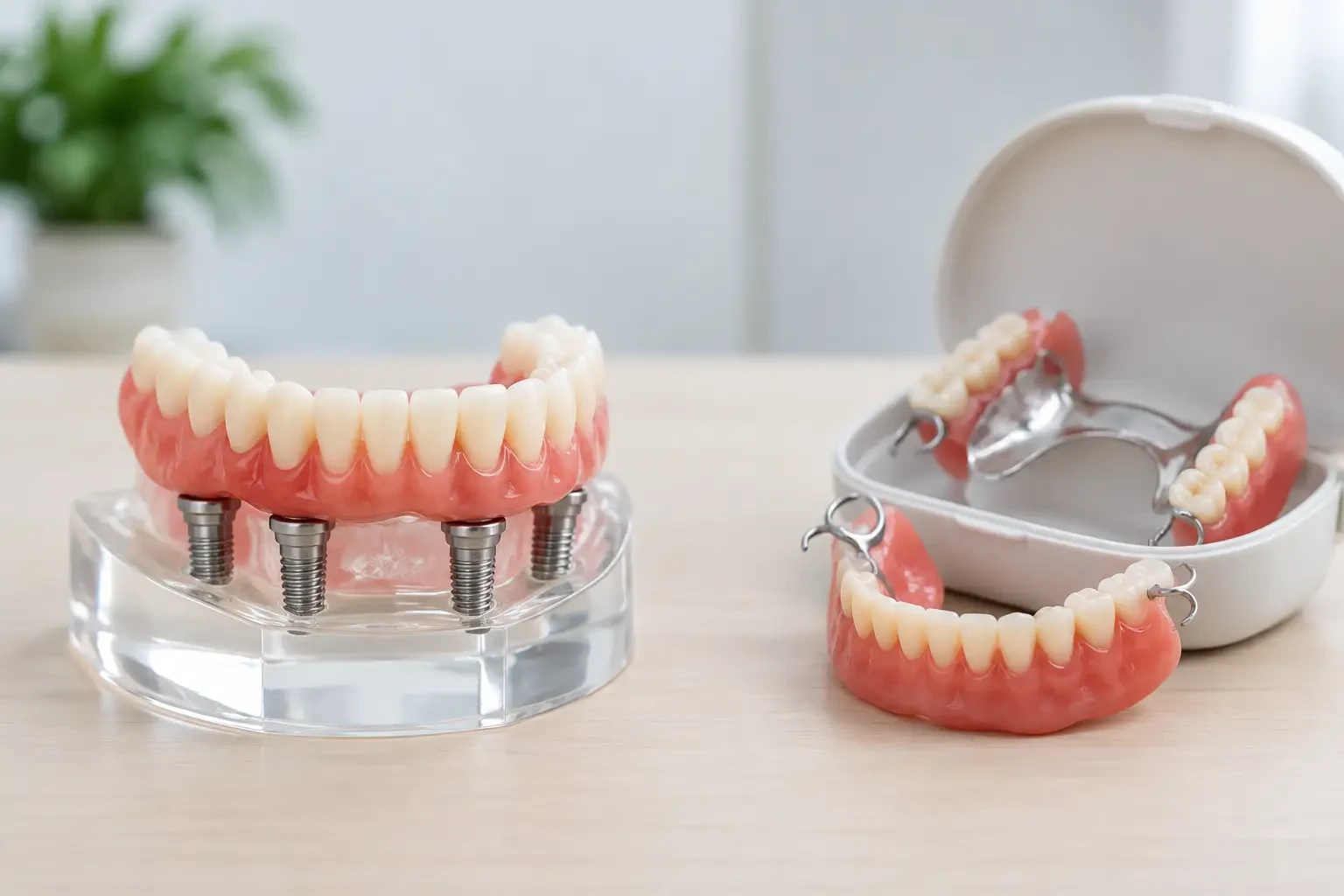
An extraction removes the entire tooth, including its roots. The area is allowed to heal, and a replacement option may be discussed depending on the tooth’s location, your bite, and your overall treatment goals. Possible replacements include a dental implant with a crown, a bridge, or, in some situations, a removable appliance.
Neither option is automatically “better.” A root canal preserves your natural tooth. An extraction removes a source of infection when restoration is no longer reliable. A thorough examination and diagnostic imaging help determine which path offers the strongest prognosis.
When a Root Canal May Be the Better Choice
Saving a natural tooth is usually worthwhile when enough healthy tooth structure remains and the surrounding tissues are stable. A root canal may be recommended for deep decay, a cracked tooth that is still restorable, significant sensitivity, an abscess, or trauma that has injured the tooth’s nerve.
Keeping the tooth can help maintain your natural bite and chewing pattern. It also avoids the changes that may occur after a tooth is removed. Adjacent teeth can gradually drift into an empty space, and the opposing tooth may begin to move downward or upward. These shifts can affect how your teeth meet and may make future replacement more complex.
A successful root canal does not mean the tooth will be exactly as it was before. It remains a treated tooth that needs professional restoration and good daily care. A crown can be especially important because teeth with extensive decay, large fillings, or root canal treatment may be more vulnerable to cracking under pressure.
Root canal treatment is often associated with fear, but modern techniques, local anesthesia, and careful planning make the procedure far more comfortable than its reputation suggests. For many patients, the pain they feel comes from the infection itself, not from the treatment that removes it.
A root canal needs a favorable prognosis
A dentist will look beyond the infection before recommending treatment. The tooth must have enough solid structure above the gumline to support a restoration. Its roots should be in good condition, and the supporting bone and gums should be healthy enough to keep the tooth stable.
If a crack extends deeply into the root, decay reaches too far below the gumline, or severe periodontal disease has weakened the support around the tooth, a root canal may not provide a dependable long-term result. In those situations, extraction can prevent repeated treatment and ongoing discomfort.
When Extraction Is the Healthier Decision
Extraction may be recommended when a tooth is fractured beyond repair, severely decayed, loose from advanced gum disease, or affected by an infection that cannot be predictably treated. It can also be appropriate for certain impacted or problematic wisdom teeth and teeth that are creating crowding or interfering with orthodontic treatment.
Removing a tooth can feel like a major step, especially if it is visible when you smile. Yet choosing extraction does not mean giving up on a healthy-looking or functional smile. It may create the opportunity for a stable replacement plan designed around your needs, timeline, and budget.
For many adults, replacing a missing tooth with an implant is a strong option. An implant replaces the tooth root within the jawbone and can support a custom crown. Unlike a traditional bridge, it typically does not require reshaping the teeth on either side of the space. However, implants require adequate bone, healthy gums, healing time, and a commitment to ongoing care.
A bridge can be an effective alternative when an implant is not the right fit. In some cases, particularly with a back tooth that does not affect chewing or bite function significantly, a dentist may advise monitoring the space rather than replacing the tooth immediately. This decision should always be individualized.
Cost Is More Than the Price of Today’s Procedure
It is understandable to compare the immediate cost of extraction with root canal treatment. An extraction can cost less at the initial visit, but it may become more expensive if you later choose an implant, crown, bone graft, or bridge to replace the missing tooth.
A root canal also includes more than one part of treatment. The procedure itself, any necessary buildup, and a protective crown should all be considered when planning. The value of treatment lies in its expected lifespan, not only its upfront fee.
For patients traveling from Arizona, Southern California, Nevada, or other parts of the United States for care in northern Mexico, coordinated planning can make a meaningful difference. It is helpful to ask whether diagnostic imaging, specialist treatment, restorations, and follow-up care can be organized within a practical travel schedule. Rio Colorado Dental Group brings general, restorative, endodontic, surgical, and implant-focused care together so patients can understand the full pathway before choosing treatment.
Insurance coverage may also influence the final out-of-pocket cost, but coverage should not be the only deciding factor. A lower-cost procedure is not a better value if it leads to avoidable future treatment. Your dentist can help you compare treatment stages and prioritize what needs to be done first.
Questions Your Dentist Should Answer Before You Decide
A clear recommendation should make sense to you. Ask whether the tooth is restorable, what the expected success rate is, and whether a crown will be needed after root canal treatment. If extraction is recommended, ask what will happen if the space is left open and which replacement options fit your oral health goals.
You should also understand the timing. An active infection or swelling may need prompt attention, while a long-term replacement plan can sometimes be staged over several visits. If you are managing diabetes, taking medications that affect healing, smoking, or dealing with gum disease, share that information. These factors can affect both healing and treatment choices.
If you have no pain, do not assume the problem can wait. A tooth can lose its nerve response and become quiet while infection continues around the root. Likewise, severe pain does not automatically mean the tooth must be extracted. Diagnosis matters more than symptom intensity alone.
Protecting Your Result After Treatment
Whether you choose a root canal or extraction, follow-up care matters. After a root canal, complete the final restoration as recommended, brush twice daily with fluoride toothpaste, clean between teeth, and keep regular preventive visits. Do not delay a crown if your dentist advises one, particularly on a back tooth.
After an extraction, follow post-operative instructions closely. Protect the blood clot, avoid smoking during healing, and contact your dental team if pain becomes worse after initially improving, swelling increases, or you develop fever. If you plan to replace the tooth, discuss timing early because bone preservation or grafting may be most effective at the time of extraction.
The right choice should leave you feeling informed, comfortable, and confident about what comes next. A careful evaluation can turn a stressful dental decision into a clear plan for a healthier smile.
Recommendations