A lower denture that shifts when you speak, a sore spot that keeps returning, or the need to avoid favorite foods can make tooth replacement feel like a daily compromise. When comparing implant supported versus removable dentures, the best choice is not simply about choosing the most advanced option. It is about finding a restoration that supports your health, comfort, appearance, budget, and routine.
Both options can restore missing teeth and improve confidence. The difference lies in how they stay in place, how they feel during everyday activities, and the treatment and maintenance they require.
Implant Supported Versus Removable Dentures: The Main Difference
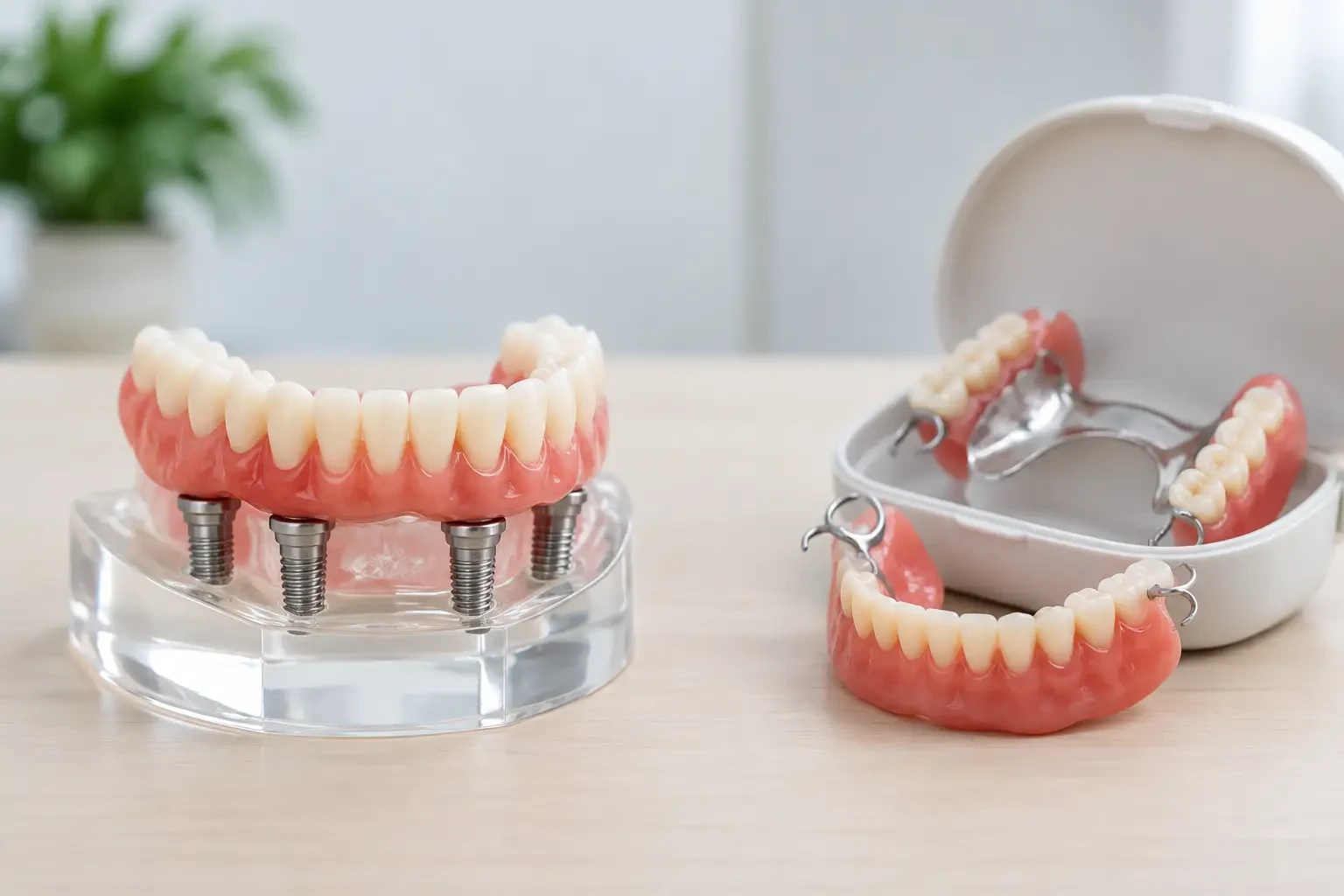
Traditional removable dentures rest directly on the gums. They are custom-made to replace a full arch of missing teeth and can be taken out for cleaning and overnight storage. Upper dentures often use natural suction against the palate for retention, while lower dentures rely more heavily on the shape of the jaw and surrounding muscles. Denture adhesive may provide additional security for some patients.
Implant-supported dentures attach to dental implants placed in the jawbone. The implants act as anchors, helping the denture resist movement. Depending on the treatment plan, the restoration may snap onto attachments and still be removable by the patient, or it may be fixed in place and removed only by the dental team during maintenance visits.
That distinction matters. “Implant-supported” does not always mean permanently fixed. Some patients want the security of implants while still being able to remove their denture for daily cleaning. Others prefer a fixed full-arch restoration that remains in place.
How Each Option Feels in Daily Life
For many people, stability is the most noticeable difference. A conventional removable denture can look natural and function well, particularly when it fits precisely. Still, it may move slightly while chewing, laughing, or talking. Lower dentures are especially prone to shifting because there is less surface area for suction and the tongue is constantly in motion.
Implants can significantly reduce that movement. When a denture is anchored to implants, patients often feel more secure speaking in public, sharing meals, and smiling in photos. Better stability can also make chewing more efficient, which may broaden food choices over time.
Comfort is more individual. A well-made traditional denture should not cause persistent pain, but gums and bone naturally change after teeth are lost. As the jaw ridge changes shape, the denture may loosen and require adjustment, relining, or replacement. Implant support helps stabilize the restoration and may reduce pressure on the gums, although the attachment components still need regular professional care.
A fixed implant restoration can feel closer to natural teeth because it does not cover the palate or move under normal use. However, it requires careful cleaning around the implants and beneath the prosthesis. It is not maintenance-free, and it is not automatically the right choice for every patient.
Bone Health and Facial Support
After tooth loss, the jawbone no longer receives the stimulation provided by tooth roots. Over time, bone volume can decrease. This is one reason a denture that fit well years ago may begin to feel loose.
Dental implants transmit chewing forces into the jawbone, which can help preserve bone in the areas where implants are placed. They do not prevent every change associated with aging, but they offer an advantage that conventional dentures cannot provide on their own.
Bone loss can also affect facial support and the fit of a removable denture. If bone volume is limited, a patient may need grafting or another preparatory procedure before implants can be placed. In other cases, a specialist may be able to use available bone strategically. A detailed examination, imaging, and discussion of medical history are essential before deciding on treatment.
Cost: Looking Beyond the Starting Price
A traditional removable denture generally has a lower upfront cost. It can be an appropriate, effective choice for someone who needs to replace all teeth promptly, prefers a non-surgical solution, or is working within a limited budget.
Implant-supported treatment involves additional steps and costs. These can include diagnostic imaging, surgery, implant components, healing time, temporary teeth, and the final restoration. If bone grafting, gum treatment, or extractions are needed first, the investment may increase.
The higher initial cost does not automatically make implants a better value for every person. It is worth considering how long you expect to use the restoration, how often a conventional denture may need relining or replacement, and how much stability matters in your daily life. A transparent treatment plan should explain what is included, what may be needed later, and which type of restoration is being recommended.
For patients traveling from Arizona, Southern California, Nevada, or other areas of the United States, coordinated care can also make a meaningful difference. A multidisciplinary practice can plan surgical, restorative, and laboratory stages together, helping patients understand the timing required for treatment and follow-up.
Cleaning and Ongoing Care
Traditional removable dentures should be removed and cleaned daily with products designed for dentures. They should not be cleaned with abrasive toothpaste, which can scratch the surface. The gums, tongue, and any remaining natural teeth also need daily care. Even without natural teeth, regular dental visits remain important for oral cancer screenings, fit checks, and evaluation of gum health.
A removable implant overdenture also comes out for cleaning, but the implant attachments and surrounding gums need careful attention. The small components that provide retention can wear over time and may need replacement.
A fixed implant-supported denture is cleaned in the mouth. Patients usually use a soft toothbrush along with tools such as floss threaders, interdental brushes, or water flossers recommended by their dental team. Professional cleanings are especially important because inflammation around implants can threaten their long-term health.
No restoration is a substitute for consistent home care. The best option is one you can comfortably maintain every day.
Who May Be a Good Candidate for Implant Support?
Implant treatment may be worth considering if your current denture slips, causes frequent sore spots, limits what you eat, or affects your confidence when speaking. It may also be a strong option for patients who want to protect available jawbone and are comfortable with a surgical process.
Good candidates need adequate bone or a viable plan to build or work with available bone. Overall health, smoking or tobacco use, diabetes control, certain medications, and a history of gum disease can all affect planning and healing. These factors do not always rule out implants, but they should be evaluated honestly.
A removable denture may be the better fit if surgery is not advisable, if treatment needs to be completed quickly, or if a patient prefers the simplicity and lower initial cost of a traditional prosthesis. There is no single solution that fits every smile.
Questions to Ask Before You Decide
Before choosing between dentures and implant support, ask how stable the proposed restoration will be, whether it will be removable or fixed, and what daily cleaning will involve. Ask about the expected treatment timeline, the number of implants recommended, temporary tooth options, future maintenance, and the likely costs of adjustments or replacement parts.
You should also ask to see how the final teeth are planned. A successful result is not only about securing a denture. It should support natural facial proportions, comfortable speech, a bite that functions well, and a smile that feels like your own.
At Rio Colorado Dental Group, specialist-led planning and in-house laboratory support can help bring the surgical, restorative, and aesthetic details into one coordinated treatment plan. The goal is to give you clear options, not pressure you into a treatment you do not need.
The right restoration should let you focus less on your teeth and more on meals, conversations, and the confidence of smiling without hesitation. A personal consultation can turn that goal into a plan built around your health and the life you want to enjoy.
Recommendations